Showing posts with label ICT for Development. Show all posts

Saturday, January 10, 2015

Review of "Smart Cities" by Anthony Townsend

 
When I picked up Smart Cities by Anthony Townsend, I was expecting to learn more about "best practices" on using ICT for urban management. Something to add on to my list of inspirational stories that I could share with city leaders in Southeast Asia. After all, the author works at Silicon Valley's Institute for the Future and directs urban research at NYU.

I was pleasantly surprised to discover that Smart City offers something much more fundamental than a collection of urban ICT best practices. In fact, it is a call to view ICT for what it is: a tool which should be used consciously and critically to improve the lives of citizens. At the base of that call, is a reminder on the importance of good civic governance.

Tuesday, December 11, 2007

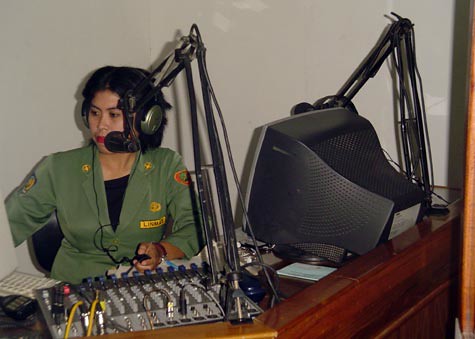
Community Radio Social Impact Assessment

AMARC has recently finished its global assessment of the social impacts of community radios. The conclusion is clear: The main social Impact of Community Radio is Voice for the poor and marginalized. In further detail, community radios are effective in supporting poverty reduction, ensuring proper governance, ensuring inclusion of the marginalized, and are effective in conflict resolution and disaster prevention and relief.

The single principal barrier to CR social impact is absence of a friendly legislation; the existence of media oppression and military threats are a generalized barrier to the development of community radio.

Case studies from Indonesia are included in this report, as contributed by Ade Tanesia from Combine under the heading Women as Producers of Information. Nice work!

Third Global Knowledge Conference

The 3rd Global Knowledge Conference (GK3) – one of the most important knowledge sharing and creative development conferences in the world – will be held in Kuala Lumpur, Malaysia, from 11 -13 December 2007. Themed "Emerging People, Emerging Markets, Emerging Technologies," GK3 promises to be a dynamic event focused on the future. GK3 will explore concrete solutions and possibilities within the inter-play, interface and interweaving of issues related to the Knowledge for Development (K4D) and Information and Communication Technologies for Development (ICT4D) in the context of our globally evolving societies, economies and technologies worldwide.

For AMARC, network activities in Kuala Lumpur will focus on how women can use knowledge sharing in their community radio programming activities to empower other women so they can play a stronger role in good governance and democracy. This is one of AMARC’s most important theme areas for development in 2007.

Thursday, October 25, 2007

From wheat to web

Nature News has a good profile on M.S. Swaminathan and portrays a balanced view of the current state of India's "ICT for rural development" initiatives.

Still, what we have are anecdotes. After more than a decade of ICT for development initiatives, shouldn't we have hard data already?

Ashok Jhunjhunwala, head of the Telecom and Networks Group (TeNeT) at the Indian Institute of Technology in Chennai, [...] says that the dozens of ICT projects across the country are a series of ongoing experiments, “some of which have worked”, he says, but “most of which haven't”.

“You'll hear about a village where ICTs have helped farmers get a better price for grain, or a village where someone has got better access to health care, but these are all anecdotal cases and don't represent the majority of ICT projects,” says Jhunjhunwala.

Thursday, July 12, 2007

(Indonesian) TV Turnoff Day: Sunday 22 July

I just found out about this from my friend Ambar. Apparently we also have a TV turnoff time in Indonesia. And it's been going on at least since 2006.

Okay, so the turnoff time is not exactly a week like that promoted by Adbusters, but a day is good enough for starters. And while the message is not exactly anti corporate capitalism /consumerism, ensuring quality time (and building media awareness) for the family - especially children - is a very good cause indeed.

Indonesia's Gerakan Hari Tanpa TV (Day Without TV Movement) will be held on Sunday 22 July 2007, just one day before the National Children's Day (23 Juli 2007). Organizers are
Yayasan Pengembangan Media Anak (YPMA - Foundation for Development of Children's Media), Yayasan Kita dan Buah Hati (YKBH), and others.

Here's the webpage containing background information, contact details, and how you can participate.

ShareIdeas.org: Mobile Knowledge for Social Change

Cellphones are changing the world in more ways than one. ICT for Development initiatives are now increasingly highlighting the use of cellular, wireless technology rather than standard personal computers (i.e. 'telecenters'). But then again, with technological convergence going on at fast pace, who could tell the difference between a cellular phone and a personal computer anymore? As a cellphone ad says: "[cellphones] are what computers have become."

So if computers with internet connection could play a role in addressing development issues, then cellphones with GPRS/3G/4G connection should potentially play bigger roles. Cellphones are predominantly personal, so instead of fostering 'community development' (which is prone to elite capture), they do a great job in fostering something more essential: 'individual/personal development.' They're cheap(er than computers), handy, easy to use, and very contextual to the user. The rate of cellphone ownership is increasing at an exponential rate in many developing countries. In Indonesia, the number of cellphone subscribers have reached 30% of the population, and 90% of the population are covered by cellphone coverage/signal.

ShareIdeas.org is an online community and a wiki for sharing ideas on how to use mobile communications for social and environmental benefits. Here you can learn (and contribute) stories of how to use the cellphone for:
  • civic engagement (i.e. monitoring a presidential election and reporting child rights violations)
  • economic empowerment (i.e. mobile-banking and rural microfinance)
  • education (i.e. using mobile games to build HIV/AIDS awareness)
  • environment (i.e. mobilizing volunteers to respond to disasters)
  • health (i.e. collecting vital health data), and
  • humanitarian relief (i.e. sending donations through text message)
The idea for ShareIdeas.org came from Ndidi Nwuneli, founder and CEO of LEAP Africa, a Nigerian NGO dedicated to nurturing a new generation of African leaders.

"Groups like ours would really benefit from a resource that shows us how to use mobile technology to carry out our work more effectively," said Ndidi at a Nokia stakeholder event of NGO and corporate leaders.

ShareIdeas.org was created in response to Ndidi’s request, with support from Nokia and Vodafone. And since a large part of its intention is to help groups like Ndidi's, ShareIdeas.org also has information and practical examples for NGOs on “how to” use mobile technology in their daily work, including
* Collect field data
* Distribute information
* Manage finances
* Manage your organization
* Respond to emergencies
* Track people/products

Check it out.

Wednesday, April 18, 2007

TV Turnoff Week: April 23-29

It's that time of the year again. OK, so maybe we would dare turn off our TV. But what about our DVD player, video iPod, XBOX 360, laptop, or PSP? All for seven days of unplugged life?

Adbusters says:
But there’s a lot more to TV Turnoff Week than shaking up your relationship with passive entertainment. It’s all about saying no to being bombarded with unwelcome and unhealthy commercial messages. It's about saying no to unfettered corporate media concentration and to the democratic deficit that results. And it's about challenging the heavily distorted reflection of the world that we see on the screen, a reflection that is keeping us ill-informed and unaware of the very real political and environmental crises that we all currently face.
The decision is up to you. But please do reflect on the topic.

Technorati technorati tags:

Tuesday, April 17, 2007

Internet price to go down by 30%

I just found this article on the Indonesian ISP Association (APJII) website. Apparently open competition in the telecommunications industry is finally going to take place.

Based on the new Ministry of ICT's Regulation No. 3/2007, the price paid by ISPs to network operators like Telkom, Indosat, and Excelcomindo for leased lines will likely go down by 50%. As this infrastructure rent represents 50% of an ISP's operational costs, then ISPs will likely decrease internet service price by 30%.

A good thing for the development of an Indonesian information society. A true information society is a society in which a large part of the added value is created from information & knowledge (content), not rent.

FYI: I don't have the latest figures, but in 2003, the total cost of 20 hours of dial-up Internet access per month was about US$ 22/month, which corresponds to 38% of Indonesia's GNI per capita. While in high income countries, internet costs are comparable to an average of 1.7% of GNI per capita.

Technorati technorati tags: ,

Saturday, March 17, 2007

Community radios under pressure?

Despite my latest posts about the virtues of community radio, the government seems to be going the other way around.

Last week, some Jakarta community radios were "ordered off the airwaves"; they were claimed to be interfering with the navigation system in Halim Perdanakusuma Airport in East Jakarta.

Unfortunately, it's not clear whether this interference is true. The frequency used for aviation radio is 118.3 MHz. However, Jawis FM, a school-based community radio that uses the 107.6 FM frequency at a meager 50 watt power was also told to stop its broadcasting activities. So was the Suara Warga Jakarta (Voice of Jakartans) radio, whose power only extends to a mere 2.5 kilometers radius.

So the question is: have the government followed the necessary procedure? Do they actually have proof of which radios are interfering with aviation frequency?

Does this progress have any correlation with the closing down of some 14 radios in Sorong, West Papua, late last year? Here's what I read from a credible source: These radios were said to be "caught red-handed" committing crime and jeopardizing national stability. And the interesting part: the procedure is that before closing down a radio, the government should provide information/guidance, and then a warning letter. However, at that time, the officer only had a general letter from the Ministry of ICT about "reporting the existence" of radios.

What's going on here?

Does the government still consider community broadcasting 'scary'? Adhi Wicaksana thinks that regulations concerning community radio are, at best, still at odds with each other.

Despite all this, do consider a few more great examples of community radio role:
  • The Jakarta Community Radio, "established in 2003 as a communication tool for local residents", has "the only radio program of its kind in the capital, perhaps the entire country, dedicated to the interests and needs of the disabled community."
  • The community radio in Wiladeg, Central Java, is giving the people a media to practice democracy and good governance.
  • The Voice of Muhammadiyah Radio in Aceh provides a service for tsunami-affected communities to trace missing relatives.

Technorati technorati tags: ,

Wednesday, March 14, 2007

Community radios reach out to West Sumatra earthquake victims

Yet another earthquake. This time, one with a power of 5.8 Richter scale hit West Sumatra some 2 weeks ago.

Combine's SaksiGempa site (in Indonesian) reports that the community radio association of West Sumatra, working together with 4 member radios, is providing a media center service for victims of the recent earthquake, the government, and aid agencies.

Radios Radila and Semarak, both in Solok, and radios Suandri and Bahana, both in Padang Pariaman, are clarifying information regarding issues of follow-up quakes with the meteorology and geophysics agency. Then they broadcast the results to reduce the panic situation caused mainly by uncertainty.

Said Hendri Ihsan, a local NGO/community radio activist,
Communication in the earthquake-affected area is down. Moreover, the mountainous geographic condition in this area makes it difficult to disseminate information. Radio is the most effective means.
Hendri's contact information is available here.

Technorati technorati tags: ,

Innovations in rural information service

Kompas (in Indonesian language) has some encouraging articles to start off the week. For one, the cost of narrowing the (urban-rural) digital divide is heading down with the new Base Transceiver Station (BTS) technology called FLASH OFDM (Fast-hopping Low-latency Access with Seamless Handover Orthogonal Frequency Division Multiplexing).

OFDM technology operates at 450 MHz frequency, can accommodate bandwidth of up 5.3 Mbps, can reach a distance of up to 70 kilometers. Much more efficient as we'd need less BTS to connect more areas. Best of all, OFDM can be integrated with GSM networks using a mini, very portable, "nanoGSM" BTS that is of paper size and of 2.7 Kg weight. Imagine that: carrying your own BTS around that can serve both voice and data.

We don't know when this technology (currently developed by Siemens) will be available. Hopefully soon. Still, a major problem in popularizing the internet in Indonesia is the prohibitive cost of bandwidth. So all this hoopla, including the hoopla about 3G, is nonsense if bandwidth quality is still patchy and cost too high.

In another article, the daily profiled an inspiring role of community radio in helping the post-disaster (tsunami) recovery of Pangandaran coastal area, West Java. Founded to respond to the disaster aftermath last year, the radio called Suara Pangandaran Darurat Recovery Ciamis Selatan (Drecs) has been providing post-disaster information that's easily accessible by affected people. They have good contact with the meteorology and geophysics agency, and even sometimes the police and army asks them for some information.

Now the local teachers' association (PGRI) has been collaborating to provide distance education through radio waves. A show called "free talk," where community members and local leaders alike can participate, discusses local development issues, from regularization of informal traders to issues of internally displaced people.

Now, wouldn't it be cool if we can see some kind of collaboration between a technology like OFDM and community radios?


Technorati technorati tags: ,

Thursday, February 15, 2007

Coming soon: the $100 (or so) laptop

So the poor kids' gadget to bridge the digital divide will be available in developing countries this month! Newsweek has a cool interview with Negroponte about it recently, calling it "the people's laptop". OK, so the price is still $150 - but the MIT guru said he'll work it down to $100.

But what's maybe cooler is the (less than) "$100 Un-PC" produced by Chennai-based company Novatium. It looks a lot more familiar to the people - just like a PC, but stripped down to the very basic parts (it only uses cell-phone processors).

The main difference between the two products is the drive behind them: Negroponte's One Laptop Per Child machine "is dependent on the kindness of wealthy partners." Whereas Novatium's Nova NetPC was about making profit, and "making the computer affordable was only part of the equation."

This reminds me of the clash of ideas between William Easterly in "The White Man's Burden" and Jeffrey Sach's "The End of Poverty".

Who will prevail?

Image from: tech.blorge.com

Technorati technorati tags:

Monday, December 18, 2006

Nerdtivist, or is it Actinerd?

I'm just back from a two-week mission, learning about a new approach to development. While my head is screaming to let some of its content out, I think I'll let it sit for a while as I try to sort out the good parts from the details.

In the meantime, let me share some interesting articles I've recently found. They're all related to ICT for development.

Apparently, there's a gap between traditional activists and the FOSS (free and open source software) community. While the two may "frequently share ethical positions and social interests ranging from freedom of expression and cooperative organization to consumer rights, privacy, and anti-trust legislation, mostly the two groups remain unaware of each other." Why? Byfield in Linux.com shares what he thinks. It's somehow related to language (jargon) gap, domain of work gap, and even age gap.

Still related, I also found through the CivicActions blog that Creative Commons has just released a "Developing Nations" license.
This new license allows creators to make their works available for attributed free distribution (copies can be freely shared, providing the original creator is credited) in the Global South, while still retaining all copyright control in the Global North.
Here's another good quote:
We're trying to hack the copyright system, in the programmers sense of hack. Not to break it but make it function in ways it wasn't intended to work. That's not because we're opposed to copyright, but because we're opposed to copyright functioning in ways that don't benefit either the author or the end user. Copyright is meant to be a tool to promote invention
So why oh why does a gap still lie between the nerds and the activists?

Technorati technorati tags:

Thursday, November 09, 2006

Less e-mail, more SMS

Indonesians may think e-mail is "more advanced" than SMS/text messaging. SMS has been widely used since the cellphone boom in the late 1990s, while e-mail tends to be for the rich who can afford a computer.

In the US, it may be the other way around. When I was in LA in 2003-04, SMS was not very popular. I'd send one to my friend and she wouldn't know how to open or reply it.

But that is changing. At least among the young Americans. For them, now, "e-mail is for old people." Students still use e-mail to correspond with professors, but with friends they'd use more SMS, Instant messaging, or social networking sites such as MySpace. A major reason for the first two is that they accomodate more real-time communication.

So just because cellphones are cheaper than computers, it doesn't mean that SMS is "less advanced" than e-mail. In the future,
mobile phones will be the prime means of accessing the web for users in developing countries.
Links are from varnelis.net. Apophenia further explains what she means by "email is dead"

Technorati technorati tags:

Wednesday, November 08, 2006

AMARC 9: World Community Radio Gathering

The 9th World Conference and General Assembly of community radio broadcasters (AMARC 9)is coming up on November 11th. Combine is sending 2 people there.

An interesting topic to be discussed at AMARC 9 is the social impact of community radios. What difference do community radios make, nowadays? The World Congress on Communication for Development apparently didn't think there's much difference. Here's how AMARC viewed their stand:
Radio specialists are dismayed that the global meeting has overlooked the vital role of community radio in empowering people and strengthening democracy in many regions, including, conflict places.
id21 insights stands by AMARC and says that community radios provide "voices for change."
While much of the debate focuses on the Internet, many planners and practitioners have begun to realise that it is to traditional media, such as radio, that poor people are most likely to turn for access to information and voice.
Technorati technorati tags: , ,

Tuesday, October 31, 2006

Hype, Semi-Hype, and Reality in "ICT for Development"

Vietnam will soon have 13 new telecenters in 10 provinces. The Saigon Times said,
Farmers in some of the country’s least developed provinces now have instant access to pricing and market information through a new telecenter initiative developed by the agriculture ministry, Intel and UNDP.
The Economist, on the other hand, was more interested in mobile phones, both on political issues,
Chroniclers of cellular people power identify two big landmarks: the rallies that toppled President Joseph Estrada of the Philippines in 2001, and South Korea's presidential election a year later, when text messages among the young brought a surge of support for President Roh Moo-hyun.
and economic issues:
About half a million South Africans now use their mobile phones as a bank. Besides sending money to relatives and paying for goods, they can check balances, buy mobile airtime and settle utility bills. Traditional banks offer mobile banking as an added service to existing customers, most of whom are quite well off. But [some banks] are chasing another market: the 16m South Africans, over half of the adult population, with no bank account. Significantly, 30% of these people do have mobile phones.
The Office of Data and Information in Sinjai, South Sulawesi, on the other hand, is more interested in the power of interactive radio broadcasting.

By facilitating a two-way information flow, the head of the office, Andi Grandyanto Asapa, enables checks and balances between the people and the government.

His public radio "Sinjai Bersatu" receives from the people at least 40 phone calls and 100 SMS per day, most about complaints and suggestions for the government. Pak Grandyanto's staff then types those messages and forwards them to the district head (Bupati). Later, his reporters go to the field to check whether the government has handled the reported complaints.

Technorati technorati tags:

Thursday, October 19, 2006

Cellphones, Real-time Prices, Real-time Negotiations

One hype/rhetoric in the field of "ICT for Development" is that price information, in the hands of poor producers, can help such producers gain leverage in dealing with middlemen. This is maybe true, but then again too many "ICT for Development" initiatives are so focused on the Internet, they forget the simple things that actually work: real-time voice communication.

Harvard economist Greg Mankiw pointed me to this Washington Post article on how cell phones have levelled the playing field in favor of poor fishers in the Indian fishing industry.

In this case, cell phones are more effective than a website containing list of prices, given that it's ubiquitous:
With 6 million new cellphone subscribers each month, industry analysts predict that in four years nearly half of India's 1.1 billion people will be connected by cellphone.
And dirt cheap:
less than a penny a minute -- the world's cheapest cellphone call rates
Technorati technorati tags:

Thursday, September 14, 2006

Tribute to A. Fatih Syuhud


Do you know that feeling of excitement when you meet someone who share your mission? That's how I felt when I was first directed into Fatih's blog.

Famous Blogger Indonesia A. Fatih Syuhud is a big driver of the "bottom-up information" movement. He says,
I'd love to see many more Indonesian bloggers blog in English, the most-widely-understood world language. So that the world knows and understands more about Indonesia by reading anything written by Blogger Indonesia.
Back in 2001, when I was so excited about the "bridging the digital divide" movement, my friend, Kang Didi, adjusted my perspective by saying this:
The most frightening aspect of the digital divide is not that the poor won’t get information, but that the poor won’t be able to contribute the making of mainstream knowledges, that they will be stuck as knowledge consumers, never producers, and that one day their local knowledges and wisdoms will disappear.
Back in those days, blogs were not so far developed. For the average people to get their message across in the Internet, they'd have to learn HTML. Then they'd have to learn tricks on how to get their website found in search engines. Today, blogs make the "bottom-up information" movement more easier and accessible. One does not have to learn HTML. Machines built into blog providers, also tools such as technorati and del.icio.us, make blogs easy to find. Audience has also widened by people being more critical of mainstream media. A good example of the "bottom-up information" movement is Global Voices, for which Fatih and my friend, Enda, are contributors.

Still, I think the "bottom-up information" movement cannot stand alone. It needs to be complimented by "better top-down information." Currently there are a lot of knowledges and research results (at the elite level, i.e., LIPI, BPPT) that are useful for poor. However, they are presented in such a way that is "un-readable" by the poor. For example, a farmer in Salatiga told me:
Yes, they trained me to use the Internet. I wanted to find information about better technologies for farming chilly. I found it. But it's a 20-page report! After reading the first 2 pages, I gave up. I didn't understand the language. It's too technical.
The Government has tried to deal with this by making the Warintek CD-ROMs: a compilation of Indonesian local, practical knowledges. The Pe-PP project is using the role of "infomobilizers" (community organizers with an ICT perspective), so that by way of information found over the Internet and direct facilitation (meaning contextualization and translation into "the people's language"), a farmer group in Muneng, Madiun, was enabled to grow better, bigger melons and find the buyers. That's why, as much as I agree with Fatih about people blogging in English, I'd also suggest people to blog in plain, simple Bahasa Indonesia. Or any traditional language.

Then there's also a matter of "side-way information," from one member of a community/ class/ group to another member. This is community building, and there's already many examples of this on the Internet. However, we need to see more "side-way information" building between the poor and marginalized. An attempt at this is the Saluran Informasi Akar Rumput initiative.

Each of these three movements need champions. And A. Fatih Syuhud, hands down, is one of the best champions of the "bottom-up information" movement.

This week, Fatih made me "Blogger of the Week." It sure is an honor, and I humbly thank him.

Technorati technorati tags: , ,

Saturday, September 02, 2006

Ghetto-izing the Internet

Nien pointed me to this cool resource: Urban Dictionary, "a slang dictionary with your definitions. Define your world." Check out how these phrases are (re-)defined:
January Joiner:
Someone who joins the gym in January as part of a New Year's resolution and by February is back to being a couch potato.

ho ho ho:
Santa's cry, or three prostitutes.
Similar to Wikipedia, Urban Dictionary allows people to collectively shape the world from THEIR perspective, based on THEIR understanding, not the expert's, not the few elite's.

Why am I bringing this up? As much as I like the the Internet, I am also concerned about its deficiencies and biases. ICT is not culturally neutral; it incorporates modernist, western values into whoever is using it or connected through it.
  • Inayatullah and Legget, in Transforming Communication, questioned ‘who speaks, who is on the net, and whose ways of knowing are privileged.’ Are women’s perspectives incorporated by the new technologies? Can women can use the new technologies to break out of traditional, marginalizing, roles?
  • A chapter by Obijiofor in this book was critical of the language of the Internet. Any language creates certain forms of thinking and suppresses others. English, in particular, as the Internet’s dominant language, is ‘a language of technical rationality’.
  • Manuel Castells, in End of Millenium, furthermore noted that there is a geographically uneven distribution of Internet content providers, as most of them are concentrated in a few metropolitan areas. This largely shapes the assumptions used in providing this content, and the types of content available on the Internet.
  • These region and life-style specific assumptions have led to the exclusion of non-metropolitan cultures, and as Castells wrote in The Internet Galaxy, make it ‘difficult for people without sufficient education, knowledge, and skills to appropriate the technology for their own interests and values.’
These are why I support efforts to bring alternative content into the Internet; content created by the not-yet-modernized, the non-urban, the marginalized urban, the non-English-language-oriented. A potential Indonesian example is Saluran Informasi Akar Rumput - an online news agency run by community radios in West Java and Yogyakarta. Through such initiatives, we can show that the world is not monolithic, that "our" knowledges are just as valuable as "their" Knowledge, and that the Internet can be used as a tool to diversify the world, rather than homogenize it.

Technorati technorati tags: , ,

Friday, August 25, 2006

In Defense of Ghost-blogging

A. Fatih Syuhud criticizes those who blog anonymously (apparently this is not the first time). I think there are many legitimate reasons to support those who chose to "ghost blog." Unfortunately, only one seem to be acknowledged by Fatih: security.

So I'm putting forward three points (not in order of importance) to refute his argument.

First point: about authority. What makes the Internet (including blogging) interesting for many people is that there are very few rules. For the large part, the Internet is (still) a free world. Sure there are ethics, but I think they should be applied forcefully only to issues that are damaging (such as spam), not issues such as "linking back," as Fatih said here:
this is one of unwritten conventional rule in blogger world: whenever someone link your blog, you're obliged to link it back.
Since when is blogging full of "rules" and "obligations"? Conventions, maybe. Consider this: saying "thank you" is not common in many Indonesian villages (unless you actually give them something), but we'd more likely get a smile or a nod instead. Or, my Japanese friend told me that there is no "please" in Japanese language. Or, I had a hard time finding the Javanese expression for "excuse me."

Second point: about Narcisism. I'm NOT apposed to it, but isn't that a bias in itself? Delicate, Delightful, Delicious said (my own translation):
People say, welcome to the era of narcisism. This saying refers to blogs and their increasing quantity and popularity.
Fatih is acknowledging this just fine, by saying
Indonesian bloggers tend to make their blogs and their names known in the google world and are proud to see their traffic achieves PG (page ranking) four plus. ...
I hardly found any Indonesian bloggers whose pictures, true full names and CVs are not attached in their blogs.
And this:
blogger is an ego-driven medium, a self-publishing means and a self-satisfying "lust" of own-self existence. Let's be honest about it.
I agree, to a certain extent. But I think your statements may be pushing it too far (they don't apply to everyone). And some bloggers may NOT like to hear that blogging is identical with narcisism.

Third point, let me support nad's note on the issue of objectivity. As Nad wrote, there are two opinions on objectivity:
1. a work cannot possibly have been made in void and thus better understanding can derive from understanding and knowledge of the background of the very person behind the work itself.

2. the work itself should be the main focus of attention. Once a work is released to public domain, it thus becomes public and its interpretation therefore rests with the eyes of each beholder.
Let me ask Fatih: If you knew beforehand that a post is written by an anonymous foreign blogger, then would you view it "differently" than a post written in the same tone by an open-identity Indonesian?

If such post is critical of Indonesia, then would you think that the former is objective and credible, while the latter is biased? If such post is critical of the foreigner's country of origin, then would you think that the foreigner is objective, and the Indonesian is biased?

We can apply this to many things: nationality, religion, gender, what have you. The truth is, not every person is a fundamentalist. I am a Muslim, but at certain times I can be very critical of other Muslims, and other times supportive. Why? Because another part of me is liberal, and another part socialist, etc., which may - sometimes - contradict with Islam. I am pro marginal communities, though I come from a well-off family. I work in a field that champions the use of ICT and hails "the death of geography," but is a fan of urban studies and learned that geography/space is still alive and kicking (ICT even makes geography more important than ever!). I'm sure I'm not the only one who lives with inner contradictions.

I'm sure Fatih means well. But hope this contributes to keeping the internet and blogging a free world.